

5·
18 days ago+1 for Endeavour, apart from the unfortunate update of legacy NVIDIA drivers (10xx series of cards losing mainline support) this December I’ve had 0 issues
+1 for Endeavour, apart from the unfortunate update of legacy NVIDIA drivers (10xx series of cards losing mainline support) this December I’ve had 0 issues

This just in, hearing aids are woke?

Here’s the original press release for anyone interested: https://newsroom.heart.org/news/long-term-use-of-melatonin-supplements-to-support-sleep-may-have-negative-health-effects
The most important sentence: “They were matched with peers in the database who also had insomnia but never had melatonin recorded in their health records. People were excluded from the analysis if they had previously been diagnosed with heart failure or had been prescribed other sleep medications.” There are a few other sentences describing how well the control group was matched. I think it was a well-designed study.
I think there is still a risk of bias present, though, because people who decide to take melatonin might have more severe insomnia compared to people who just decide to just “live with it” and are not using sleep aids.
The next step should be a randomized clinical trial looking at heart failure rate in patients with insomnia dosed with melatonin versus placebo and/or a different medication. Until then, correlation does not mean causation. I don’t think such a study will be done in the US because melatonin is considered a dietary supplement and is not subject to the same degree of regulation as medicine. Maybe in the UK, since melatonin is prescription only?
Tiny castle or big banana?
It gets better - the local minor league baseball team is called the Florence Y’alls. And their mascot is a water tower. It’s so Midwest.
Jimthew.

By the time I finished graduate school, reddit was dead so I never bothered getting verified on the Science subreddits. It was a bummer!
I’ll be the pedant no one asked for - the sodium and potassium channels in the neuron respond to voltage changes in the membrane, so the author isn’t wrong.
Action potentials are generated when dendritic (input) channels bind with neurotransmitters like glutamate and GABA released by the axon terminal (output) of the pre-synapse cell. When these channels open, the let in ions like Calcium, Sodium, and Chloride.
These ions change the electric potential across the cell membrane, once this passes a key threshold, the sodium channels in the rest of the cell open up and generate an action potential. It’s driven by ions with electric charge (electrochemical).
Not quite, an iron lung replaces a dysfunctional organ. I’m saying we can already grow neurons onto circuits, and it’s difficult (not impossible) to implant neurons into a body. I don’t easily see how these bio-engineered neurons make those processes easier.
Credentials: I published in this field, but I don’t have time to read the entire paper right now.
This is exciting work. Based on the key highlights, it sounds like their work focuses on how plausible it is to construct the bio-artificial neuron, and they have done so with great success.
What I would like to learn about is what advantages this technology has compared to just cultivating neurons on a microelectrode array. Are the artificial cells easier to maintain? Do they interface with electrodes without developing glial scarring like our brains do? Can they bio-engineer special proteins (e.g. optogenetic channels) easier in these cells than in mouse lines?
The discussion section is fairly anemic. The authors say this will “spearhead” additional development but I was disappointed the authors didn’t clarify what will be additionally developed.
Until these advantages are spelled out, it feels like we’re re-invented the biological wheel. We already have cells that can integrate and fire at low voltages. They’re called neurons. Why did we need artificial ones?

I was about that age when I was gifted a microscope. No idea if you can still find them that cheap, though

This happened with an academic conference (physics iirc). A professor was asked to speak and she submitted a headshot for use in their advertising, but the conference wanted a different aspect ratio. Rather than crop the image, the materials designer asked ChatGPT to expand the photo to the correct size. It gave the professor a low cut shirt, and no one at the conference company noticed until the promotional materials were distributed and the professor contacted them.
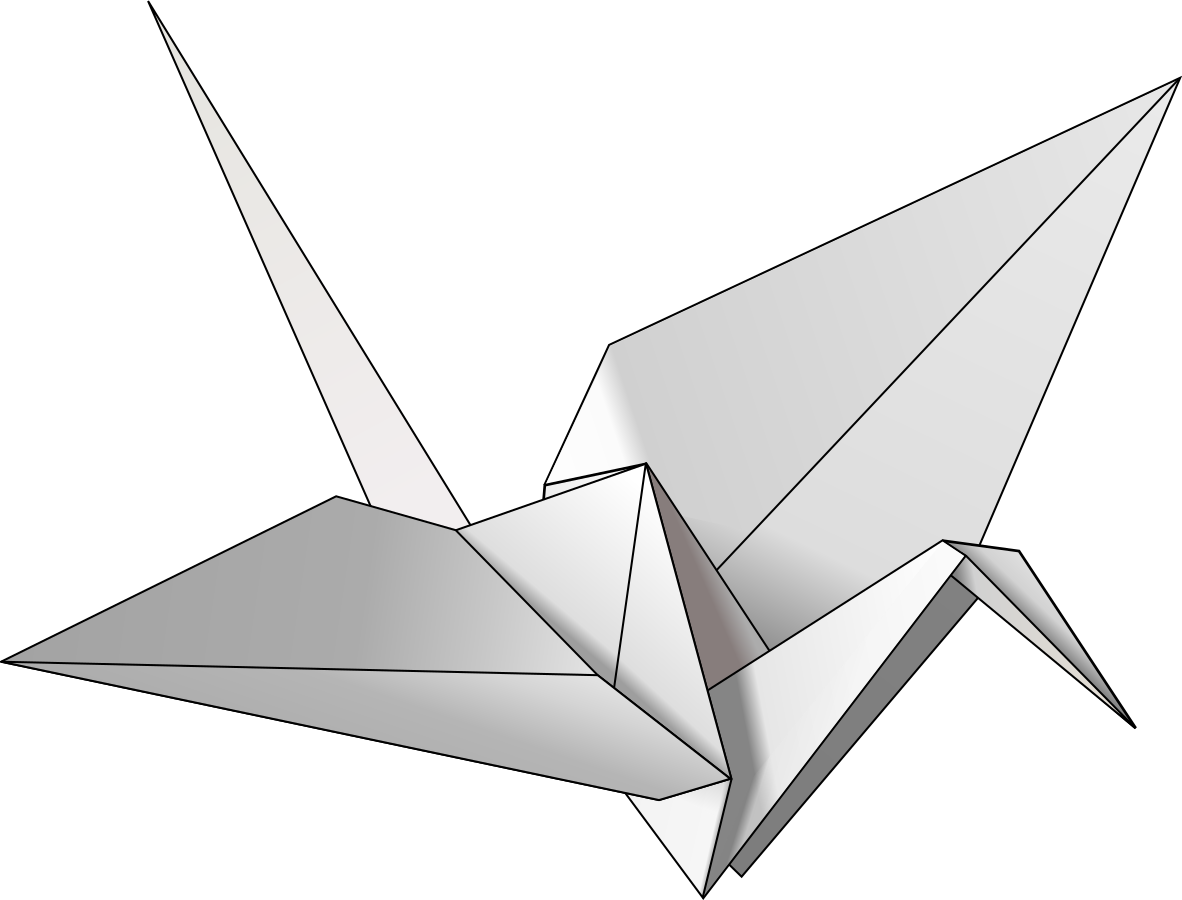
Fold-tober sounds fun! I’d get into it

I’ve been watching this treatment for a while, in my opinion it’s one of the most exciting development in modern medicine. It represents a lot of potential - Huntington’s is one of many brain diseases related to protein aggregates, so this technology could be adapted to other diseases. Plus, this is the first curative treatment for what was otherwise a 100% fatal genetic condition.
Maybe this will fix my inability to progress with the Queen of the Highway quest? I never received the follow-up call once the previous quest was completed…
It doesn’t look to be mentioned in the patch notes. Anyone here have tips? I’d rather not re-load my last save prior to this quest, I’d lose 6 hours of progress.

Ai has been in drug discovery long before LLMs were a thing. It’s revolutionized our ability to identify possible molecules and proteins that can save lives.

Ah, the old effect size vs significance issue, thanks for clarifying. I perused the link you sent, I didn’t do a deep dive. The authors could have used more precise language.
Here’s a second paper from 2017, https://eprints.gla.ac.uk/151483/1/151483.pdf , which looks at duration of breastfeeding and SIDS. Not sure if you’ve come across it, but I was surprised to see the potential protective factors don’t begin until breastfeeding has gone on for at least 2 months.
Unfortunately I think the odds that we get a randomized clinical trial looking at breast vs formula are low - I didn’t find one in my brief Google Scholar search, but I’m also not a pediatrician.
But, ultimately, the first link i provided includes breastfeeding as part of a larger suite of recommendations for co-sleeping that, if all are followed, bring the risk of SIDS down to a comparable rate with modern safe sleep recommendations.
I’ll agree that there’s a lot of conflicting information when it comes to parenting, it’s called the mommy wars for a reason. But, I’ll disagree with you that I provides pseudoscience. I’ll direct you specifically to references 11 through 13 in the link I provided. They are dated, but peer-reviewed.
I’m also confused by your link, it appears to be a meta-analysis which “found ample evidence that both breastfeeding and [pacifier] use reduced the risk of SIDS.”
Overall, I like Cribsheet’s stance again - the best baby is a fed baby, the difference between a breastfed baby and a formula-fed baby are very minor and do not result in any persistent, dramatic differences.
Surprisingly, that’s not the entire story of SIDS - but it is one of the biggest contributing factors to why co-sleeping can be unsafe. It’s also why alcohol consumption dramatically increases the dangers.






Academic publishing was definitely a contributing factor to why I left academic research.
I also believe we should incentive peer-review. Maybe every researcher should be evaluated on how many articles they peer-review each year, relative to the amount they publish. I knew some researchers who would publish dozens of articles every year, would peer-review zero of them, and then complain about poor quality peer review.