

3·
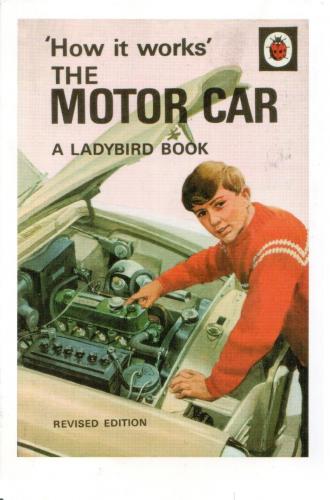
1 month agoIt’s a Photoshop of a real book cover
It’s been used as a sort of meme template with different titles for over a decade, long before AI image generators were a thing
It’s a Photoshop of a real book cover
It’s been used as a sort of meme template with different titles for over a decade, long before AI image generators were a thing

You can keep a short position for a long time, as long as you can maintain margin, which gets bigger if the stock price continues increasing, and pay margin interest - there is no set date when the short has to he closed, it’s indefinite. Sometimes the lender who loaned you the stock can ask for it back, and if you can’t locate any more shares to borrow to replace the returned shares, you might be forced to buy the shares back and close the short, but this is not common, at least during normal market conditions.

This is only partially true. Very early on, this was the case - Chinese characters started as pictograms representing objects and concepts. But this was fairly limiting in how much complexity you could capture without creating an unmanageably large set of unique pictograms. So the system evolved to use compound characters (characters made up of 2 or more components) incorporating phonetic (i.e. pronunciation) information into the writing system.
Most Chinese characters used in past 2000 years are made up of parts related to their meaning or category of meaning, and parts related to the pronunciation of the spoken word they represent (at least at some point in time, typically in Old Chinese) - these are called phono-semantic compound characters. The first comprehensive dictionary of Chinese characters that was created almost 2000 years ago already classified over 80% of all characters as phono-semantic compounds. This percentage also went up over time in later dictionaries as new compound characters were still being added.
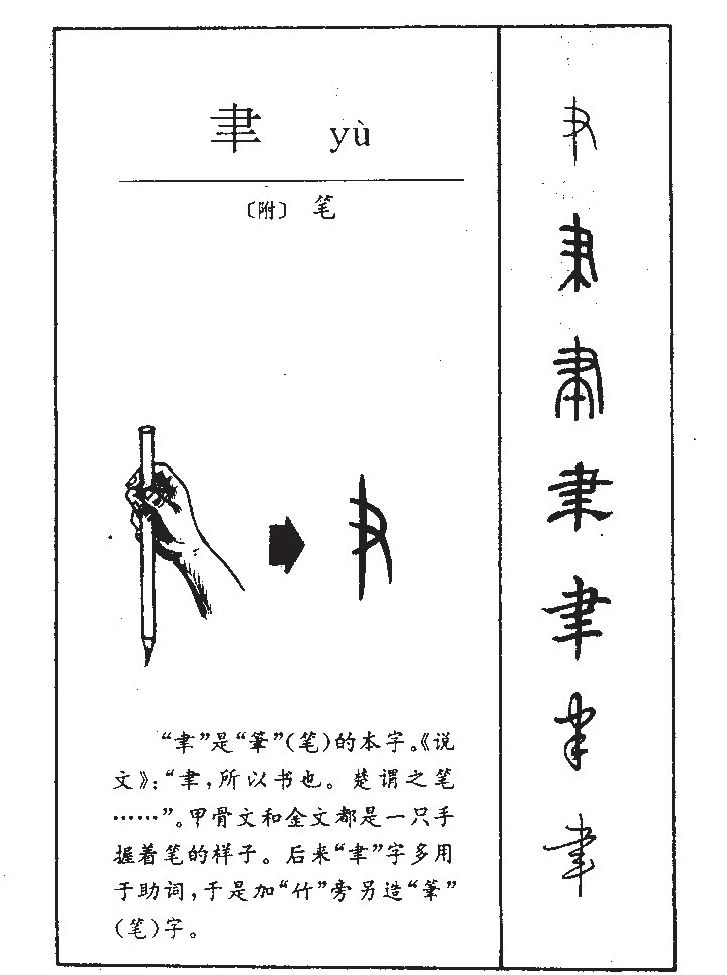
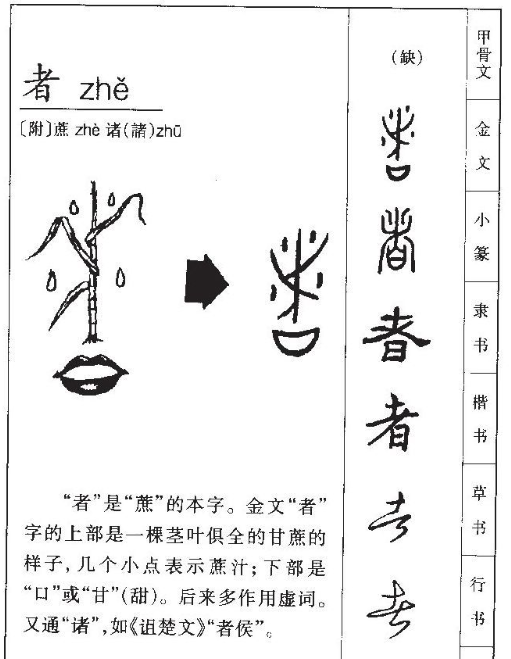
As an example the character for book (書) - is made up of 2 parts, the semantic part is 聿 (brush - in its original form a literal picture of a hand holding a brush) on top (so the word is related to writing or painting), and 者 on the bottom (the meaning of 者 is not important here (it was a picture of a mouth eating sugarcane originally, but lost this meaning long time ago), but 者 in Old Chinese was pronounced similar to the Old Chinese spoken word for book, so it serves a purely phonetic function here)
When Chinese writing was adopted in Japan, it wasn’t really used to write Japanese - it was used to write Classical Chinese. Literate people would translate from Japanese to Chinese (which they would have been fluent in) and write it down in Classical Chinese grammar and vocabulary, not spoken Japanese grammar. They could also read it back and translate on the fly into spoken Japanese for Japanese speaking audience. They also brought in the Chinese pronunciation of the Characters into Japanese (in fact several different versions of this over time - see Go-on, Kan-on, etc.) so the phonetic hints in the characters were still useful when learning the system.
Attempting to write spoken Japanese using Chinese characters was difficult, initially they would actually use Chinese characters stripped of their meaning to represent Japanese syllables. These were later simplified to become modern kana
Spoken Chinese itself evolved beyond the monosyllabic written Classical Chinese (which remained quite rigid), so for a long time, Chinese also wrote essentially in a different language from how they spoke. It was only fairly recently that vernacular Chinese began to be written (rather than Classical Chinese) with it’s polysyllabic words (most words in modern Chinese have 2 or more syllables, and require 2 or more characters to write, further distancing modern words from the original simple pictogram meanings)
So while the idea of some kind of universal abstract concept representation divorced from phonetics sounds intriguing, in practice it is a poor way to capture the complexity and nuance of spoken languages, and all languages (including Chinese) that attempted to adopt it ended up having to build various phonetic hints and workarounds to make the system actually useful and practical for writing.
I think the lady is air cello, not piano - her left hand is on the neck, right hand holding a bow
The sitting guys could both be violins too, hard to tell.

It’s the Infinite Improbability Drive though, not Probability, that makes no sense :)
+1 for MoCA
I switched from powerline to MoCA about 10 years ago, and it was a huge step up. Even though it’s half duplex, since MoCA version 2.5, there is enough total bandwidth available to sustain 1 Gbps in 2 directions simultaneously, so it is functionally almost equivalent to full duplex 1 gig Ethernet (except for few ms of extra latency)

pihole often doesn’t help, as many IoT devices either use their own DNS servers and ignore the one provided by your network, and sometimes even skip DNS completely and just connect to hardcoded IPs directly. Even blocking DNS at the firewall/router is getting more difficult with increasing use of DNS over HTTPS and custom DNS server IPs that aren’t in public lists. (I block all known DNS server IPs at my firewall, forcing any device to use my own DNS servers, but even that is not always completely effective)
It’s usually best to isolate IoT devices on VLANs with no internet access (blocked at the router/firewall) Although there are now even devices that can autonomously connect to external WiFi networks like Amazon Sidewalk, to gain internet access and bypassing any restrictions you might try to place on them…
For many (most ?) people who learn to like durian, a switch happens inside the brain, and the smell becomes appetizing. The first few times I encountered durian, I thought the smell was vile - but I’ve become a durian lover eventually, and they smell delicious to me now.
Funny enough I also like stinky cheeses, but still find them stinky (even though I like the taste) - for some reason it’s different with fruit.
I had my first durian at 35, and it has become one of my favorite things ever.
I’ve managed to convert at least one person as well - friend of mine (we were mid 40s at the time) didn’t like it at first, but the second time he came around, and now loves it as well.
Sometimes I order the unique varieties from Year of the Durian - the diversity of durian flavors is mind blowing honestly, it’s not all Monthong or Musang King, there are some crazy durians out there.
Fun fact, California doesn’t mandate safety or roadworthiness inspections for personal vehicles at all - only emissions.
This was a bit of a surprise to me when I moved here, given CAs reputation.
To differentiate it from O - making 0 narrow is a common way to do that
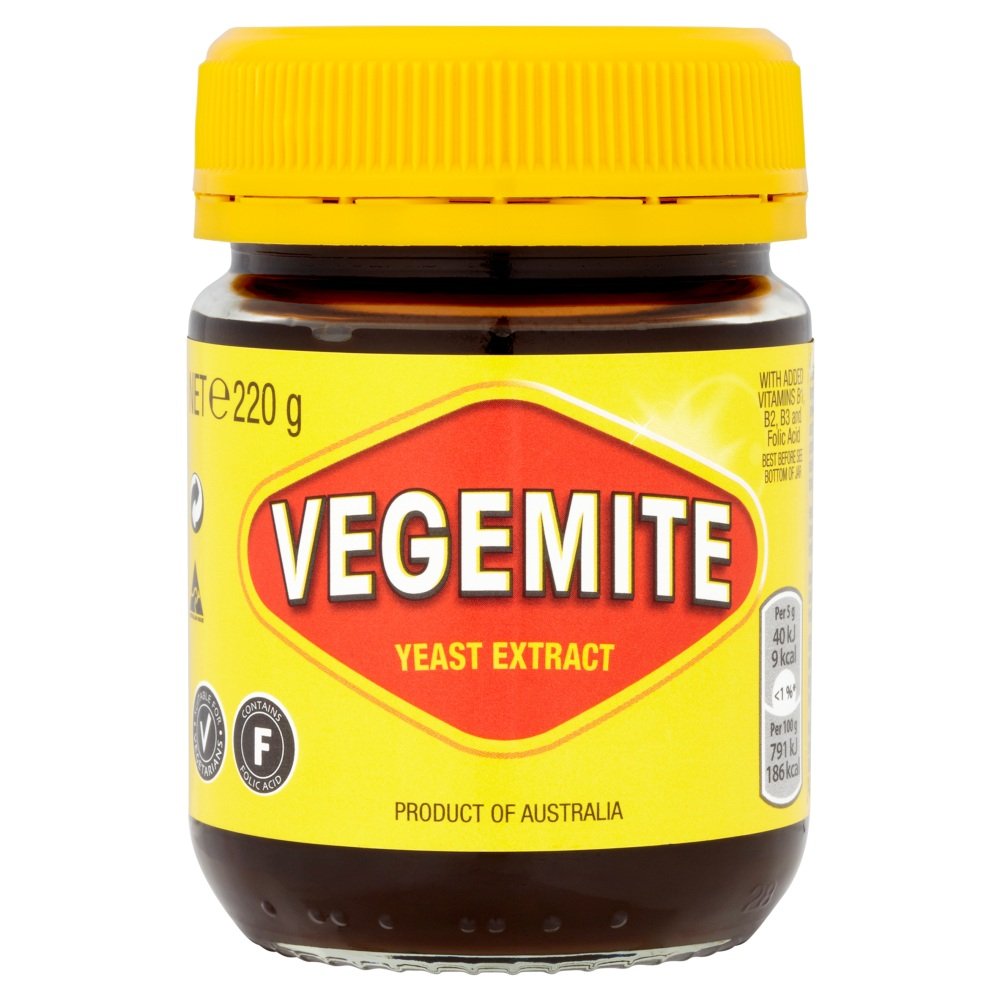
It says in the manual that it’ll only connect to 2.4GHz networks, but I have both frequencies active on my router, and no dice.
Are they using the same name (SSID) ? Some 2.4 only devices won’t connect to a network with the same SSID on different bands. I have a separate IoT SSID available on 2.4 only for such devices (it’s also on its own VLAN)
USSR was not Axis ffs… Axis was Germany, Italy and Japan and their allies during WW2 - the enemies of USSR, which was allied with the US in that war.
2nd world refers to the Eastern Bloc countries during the Cold War, including USSR and its sphere of influence, as well as China
deleted by creator
The #1 best show is Twin Peaks: The Return of course :)
It was the 90s… rules were different then ! I still have my white pants deep in the closet somewhere… they haven’t seen the light of day in a while though :)
I worked at Bell Labs back when this photo was taken - my office pretty much looked exactly like this, chair, furniture, Sun SPARCStation on the floor…
Bjarne still rocks white pants sometimes to this day though ! And the same haircut - he really committed to the look :)

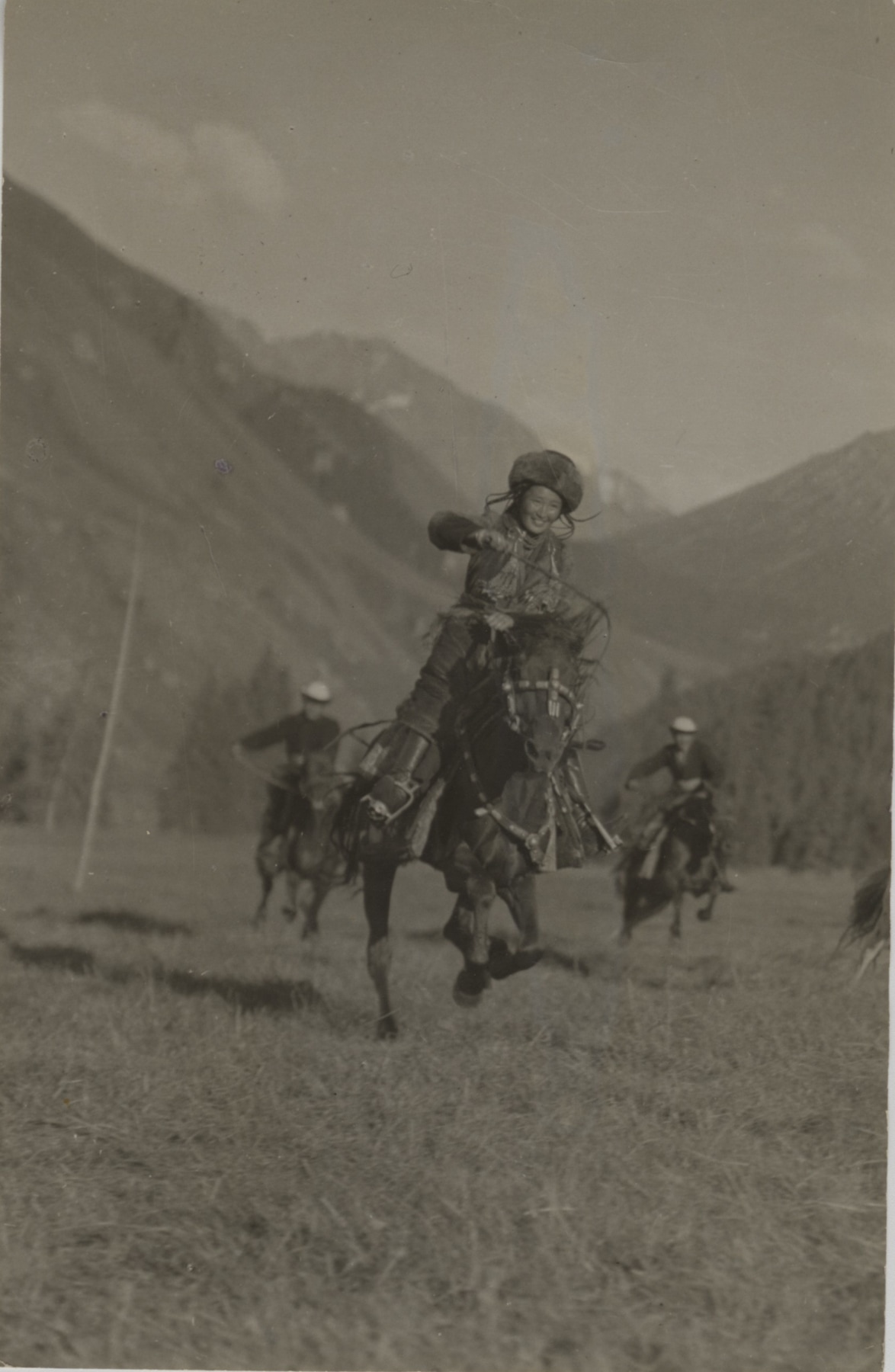
Fast film (you can see how grainy it is when you zoom in a little) and shooting in full bright sun = you can shoot very short exposure and freeze motion. There were already cameras in the 1930s with mechanical shutters that could do 1/500th and even 1/1000th of a second exposure, which is plenty fast for this type of shot.
The lens looks pretty fast too - depth of field is very shallow, although part of that is also due to possible use of medium or large format - faster lens (lower f stop) and larger film both allow more light capture, and therefore faster exposure as well, but at the cost of less depth of field.
Edit: here is a good print of the full frame - looks like ~1.50 ratio, so probably 35mm film (not medium or large format) - I can’t find a lot of information about what cameras Max Alpert used in the 30s, although he did use a 35mm Leica on at least some photos from that era. A Leica III could do 1/1000 in 1935 for example. The early Soviet cameras from the 1930s were also basically direct copies of Leicas. The frame also looks a bit underexposed, which could be due to pushing the exposure for more speed.




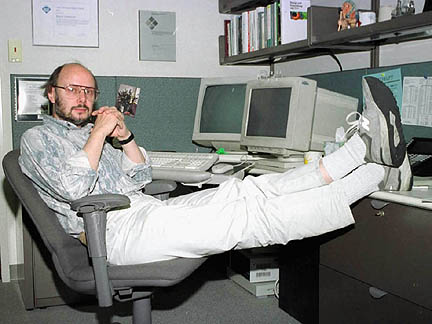

I worked at Bell Labs in the 90s, on wireless stuff, but we were still using the “in house” cfront compiler at the time, and would e-mail the compiler group, which included Bjarne Stroustrup, with issues sometimes. I learned C++ from his book before I joined Bell Labs, so that was a bit of a holy shit moment for sure for me then.
Kernighan, Ritchie and Thompson all still worked at Bell Labs as well at the time, but the company was huge then, and they were all in a different location from my team, so I never had any opportunities to meet them.